

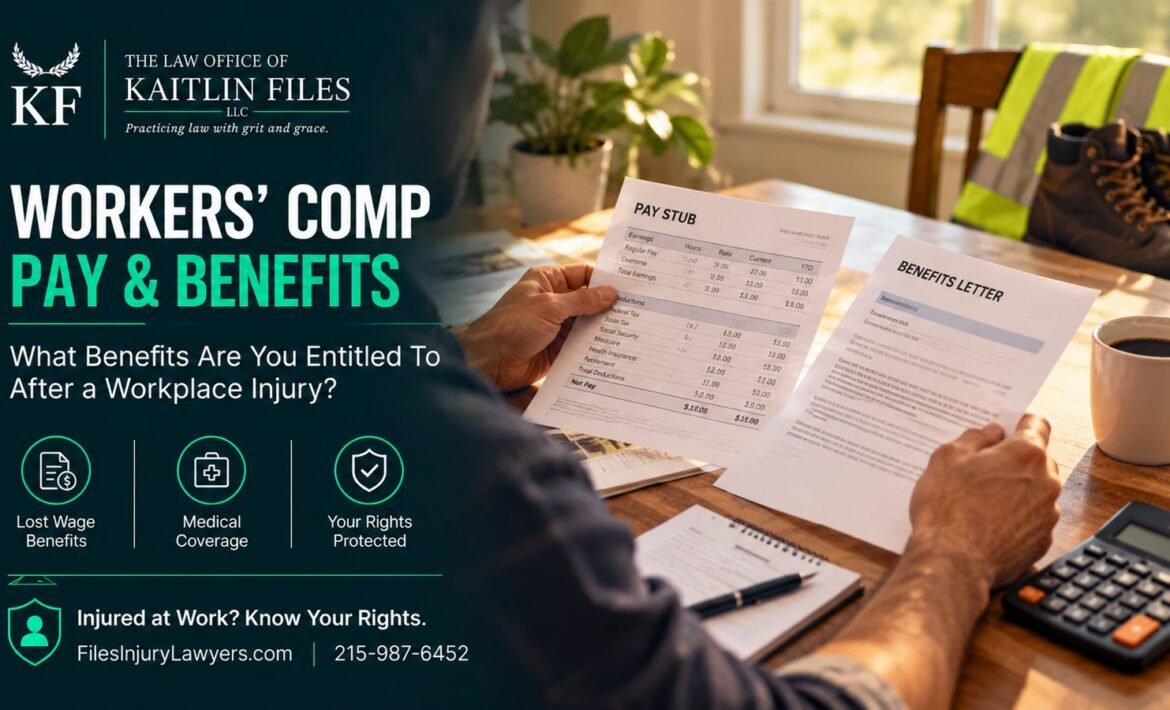

The First Check Arrives, and Something Looks Off
You finally get your first workers’ comp check. You open it, do the math in your head, and it does not add up. You used to work overtime most weeks, and you had a second part-time job on weekends. The check looks like it was based on an average weekly wage far lower than what you actually earned.
You might be right. Mistakes in wage calculations are common, and they can cost an injured worker thousands of dollars over a claim. Here is how average weekly wage workers comp PA calculations work for workers in Bucks, Montgomery, and Delaware counties, including Levittown, Doylestown, and Media.
How Your Weekly Benefit Is Calculated
Pennsylvania starts with your average weekly wage (AWW), meaning what you typically earned before the injury. For most workers, the insurer looks at the 52 weeks before the injury, splits them into four 13-week periods, and averages the three highest.
Your compensation rate is usually two-thirds (66⅔%) of that AWW, subject to a state maximum and a tiered minimum. For injuries on or after January 1, 2026, the Pennsylvania Department of Labor & Industry set the maximum weekly rate at $1,394.
2026 Pennsylvania Compensation Rate Tiers
| Your Average Weekly Wage | Your Weekly Benefit |
|---|---|
| $2,091.00 or more | $1,394 (maximum) |
| $1,045.51 – $2,091.00 | 66⅔% of your AWW |
| $774.44 – $1,045.50 | $697 flat |
| $774.43 or less | 90% of your AWW |
Lower earners are protected under this formula, so people who earned the least receive a higher percentage of their wages.
What Should Be Included in Your Wages
Insurers sometimes use only your base hourly rate. Your AWW may also need to include:
- Overtime pay
- Bonuses and commissions
- Wages from a second job you held at the time of injury (concurrent employment)
- Shift differentials
- Some fringe benefits, depending on the situation
Leaving out a second job is one of the most common mistakes. If you worked at a warehouse in Bristol during the week and a restaurant in Bensalem on weekends, both may count.
How to Check Your Own Numbers
- Find your Notice of Compensation Payable (NCP) or Notice of Temporary Compensation Payable. It lists the AWW and comp rate the insurer used.
- Pull your pay stubs or W-2s for the 52 weeks before your injury.
- Collect proof of any second job.
- Compare the numbers. If the AWW on the notice seems low, raise it quickly.
You can ask the insurer to fix the error. If it will not, a petition can be filed asking a Workers’ Compensation Judge to correct the wage, and you may be owed back pay for underpaid weeks.
When to Speak with a Pennsylvania Workers’ Comp Lawyer
A difference of just $50 a week adds up over months or years of benefits. A lawyer can review your wage records, spot what was left out, and push for the correct rate. Learn more about the firm’s workers’ compensation services here, or see answers to more common questions on our FAQ page.
Every Dollar of Your Check Matters
Your workers’ comp check is meant to replace part of what you earned, so it should match what you actually earned. Check the math, gather your pay records, and do not assume the insurer got it right.
If your workers’ comp check seems too low, The Law Office of Kaitlin Files LLC can review it for you. Contact Files Injury Lawyers today by visiting filesinjurylawyers.com or call us at 215-987-6452.
FAQs
How much does workers’ comp pay in Pennsylvania?
Usually two-thirds of your average weekly wage, up to a maximum of $1,394 per week for injuries in 2026.
Does overtime count toward my workers’ comp rate?
Yes. Overtime earned in the year before your injury is generally included.
What if I had two jobs when I got hurt?
Wages from a second job you held at the time of injury may be included in your average weekly wage.
Where can I see how my rate was calculated?
On your Notice of Compensation Payable or Notice of Temporary Compensation Payable.
Can I get back pay if my rate was wrong?
Often, yes. If the wage is corrected, you may be owed the difference for past weeks.
This article is general information about Pennsylvania workers’ compensation and is not legal advice. Every case is different. For advice about your situation, speak with a licensed Pennsylvania attorney.